What Do You Believe About Yourself?
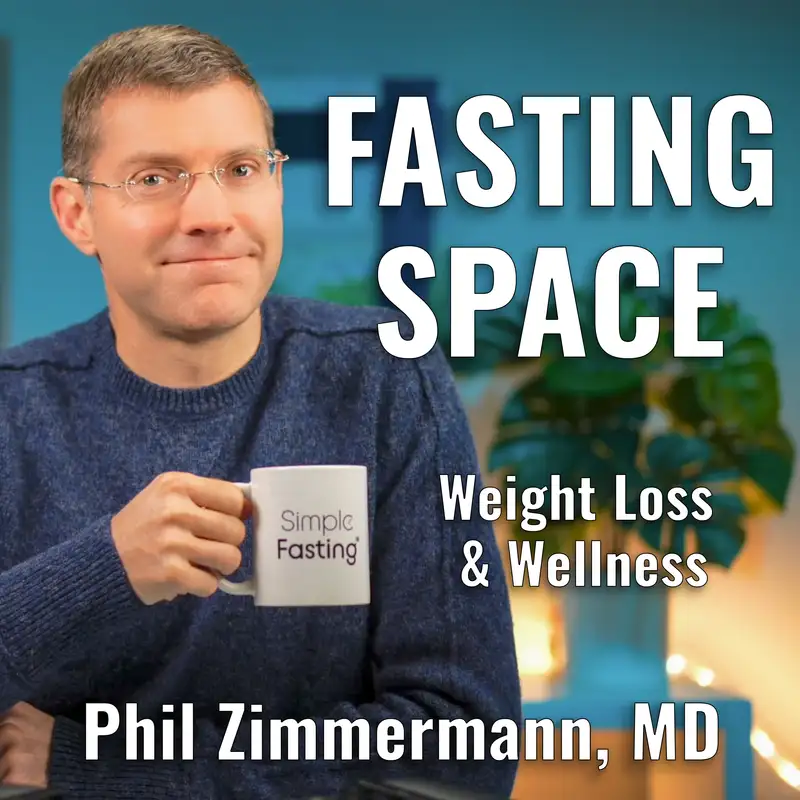
Welcome to Fasting Space.
I hope that you are doing so well today.
Setting my intention here, I want to help you have
the most thoughtful experience here in this session.
I wanted to help you on your path toward better health,
whether that's a weight loss path or some other health path.
Dive in with me here.
We're going to do a couple things at the same time,
kind of the surface level.
grab a coffee or hanging out at a coffee shop
having a chat about health and wellness in that space.
Maybe it is actual fasting space.
powerful space in the body to move toward health or sin.
Nothing is getting in the way of what the body wants to do.
We recognize the body is strong and powerful.
It has energy here to power us in this space.
And when we give it that space.
Body says, hey, I know what we can do.
Some maintenance projects, powerful, powerful space
so we can be doing that here.
And then the deeper level too.
We're going to dive in on this question.
What do you believe about yourself?
It's an opinion.
Tell you what is the opinion that you have.
What is the belief the current perspective,
the current assessment of who you are?
And what does that mean to you said to me,
these are deep questions.
What does it mean?
Your opinion of yourself?
Because.
You say, how does that shape my thinking and actions?
How does it shape your thinking and actions?
This is what we really want to get into.
And if we're trying to walk the path
toward better health,
if we're identifying obstacles in our way
and we're overcoming them, if we see on the deepest level,
which is what I think is the case.
That mountain is actually us.
We are the biggest opportunity and impediment.
Do you ever feel that way?
It's like,
obviously we are the ones that are driving the path forward,
but do you ever feel like,
oh man, we got to get over ourselves first?
That takes a really, really thoughtful attitude.
Mindset got to be very kind and compassionate.
In my view, to do that in a sustainable,
thoughtful way, which is the only way to do it.
And my, my view, I've said on the,
program before, we're often the hardest on ourselves.
Do you feel that way?
I say it's good to think of our relationship with ourself
like a good friend.
Hopefully, if a good friend was going through
what you are going through, how would you treat them?
Would you be kind to them and helpful and thoughtful?
Of course we would. Right?
So we want to treat ourself in that way always.
Not pushing ourselves through any sort of process
that feels, overwhelming, or anything
in any way, because the natural processes,
everything that I'm talking about this on this channel,
very powerful.
The toolkit I like to describe that we got a toolkit
and we can choose the right tool for the opportunity.
And then just to review, if you're new coming through,
I consider fasting like that base layer.
It's just opening up some extra space in the day.
My view?
Simple fasting, basically fasting within a day.
We're talking some yesterday diving in on it may be.
Or with us today, people doing some advanced fasting,
some really incredible dedication,
into a process like that.
And that's, you know, that's out there.
That's something I've done twice in my life personally.
And an extended fast is a very unique,
challenging, interesting human experience.
There is definitely powerful healing potential there.
But also, you know, you bring in a
so intense way out on the curve of intensity.
The thing that I want most of all
is to say how much bang for our buck
can we get from the very early side of the curve
so that it's as gentle as possible?
Never want to.
Discourage anyone in an appropriate way,
although I will tell anybody who is doing something like that
you should have some oversight from
someone can help monitor that.
But I say, as a primary care doctor,
you know, as an internal medicine physician,
to me, the biggest, the highest priority in medicine,
for myself personally, something I feel is
in great need of more respect in our society.
First, do no harm.
This is has to be the guiding principle,
especially when you look at the history of medicine,
when you look even back into the 2000s
Institute of Medicine report on
I genic injury in the medical system
means like that the medical system
actually hurting people through errors
and other things that say first do no harm.
This is how this is really how simple fasting came to be
when I was trying to navigate in a primary care practice.
How do we help people
thrive and flourish and have metabolic health?
Without doing any harm?
This is the thing.
And you know, if you sit down,
you go to a weight management clinic
and you sit down
and you start talking about pros and cons of medicines
and surgical interventions and things,
and I say I've had plenty of talks.
I've prescribed thousands of weight loss medicines.
I'm sure I don't count them,
you know, but thousands of patients
and things for years and years.
And, as I got into it,
see, there is the longer I did that,
the more harm I encountered.
Okay? You see benefit and harm.
And I say, I have got to optimize this right.
How do you optimize?
for me, as like my medical practice,
I want as much benefit for my patients as I can possibly get
with as little harm as possible, I discovered fasting.
I've told this story a number of times, right?
Fasting came to me like a gift that just,
It's like the heavens opened and it came one day.
Just saw it, I think, whoa, is somebody getting healthier
just by doing nothing?
This is just like a revelation to me.
And just a little bit of it,
you know, 18 hours, 18 to 20 hours.
And I'm like, seeing people's blood sugar
getting better, people feeling better even.
I'm like. No risk. This is what I want to open up to people.
Your body. The body handles this thing.
I saw this yesterday.
Someone is sick, but he uses it for healing.
So it's like we're talking about in most circumstances
anti risk.
That's what we want.
More brutal than a drill sergeant.
Never lost and kept off any weight with that mentality though.
Yeah. Thank you for sharing that.
Yeah.
This is the tendency this I know is my own personal tendency.
This has been you know, a path, some work I try to do.
Let's show some grace, kindness, compassion I have, yeah.
Like you're saying.
SAT with so many people who are, like, in that space,
the drill sergeant with the self.
And, and we got into that in that book in the fall,
thinking fast and slow,
where he, the guy who wrote it, Daniel
Kahneman, was actually interviewing
and working with an actual drill sergeant.
And see, I loved that he's with all these Air Force cadets.
Do you remember that one?
And, and the is in there trying to.
Show him, like praising the good
going to be a lot better than punishing the bad,
because of mean reversion.
And that's what it was like trying to show the person.
When you yell at people who are doing badly,
chances are they're going to do better anyway.
Nobody wants to be doing badly.
And then you set up this negative cycle where, oh,
you punish someone so badly,
and then they were going to get better anyway.
You thought it's because you were screaming at them,
but really it's the natural cycle.
People don't see cycles.
So we can identify that pattern in our life. Right.
Have you experienced that pattern? Pattern?
Have you gotten stuck in it?
This is how we get stuck in cycles of negative thinking.
Because we get so angry with ourself, we treat ourself badly.
And then, you know, the natural flow of things.
Things do get better.
It builds the pattern like, oh, look,
I really beat myself up and I started doing better.
Can is how we get trapped in a negative cycle.
We want to recognize that and talk like this.
Like help be like,
oh identifying it, seeing it and realize think
what was the session we did after
and like looking to the light right like that.
We are trying to lift ourselves up, not flogging ourselves,
flogging yourself a good way to beat yourself down, and very,
very hard to end up in a sustainable, path of health.
That way.
The biggest thing we're trying to do here
find joy on the journey.
If you can find joy on the journey, joy, peace and contentment
in the present moment, that's what we're trying to do here.
Create a little space floating
through a space where you say, hey, this is feeling good.
Like I can do this.
We kind of gather here in fasting space,
help us to flow out in fasting space
in the rest of our day,
to the extent that you find benefit from it and want to do it.
Take that sort of mindset, this sort of discussion
that we're having, building positive energy,
connecting with other people who are saying, yeah,
I'm floating on this space
like we can do it, you know, and then practicing it.
And this is, this is a thing.
Fasting is a practice, just like any,
health practice, any natural health practice,
whether that is a movement routine of any kind
going for a walk, going for a bike, doing any sort of,
movement practice, whether it is just a practice
that we keep, working on
building the habits of healthy food coming into our body.
Loved the, comment we had there.
What is it?
A week or two ago,
someone was saying, describing like eating.
We don't take it seriously enough, you know? Really, isn't it?
I think what was the word they used was sacred.
And this is a word we don't see too much in society. Right.
But taking a food, it becomes a part of us.
Like when we start thinking of it that way.
Like it's a really, really deep process.
And we say you are what you eat. I mean, it's true.
We like we want to build the body
out of the very best stuff, you know,
and, you know, fasting space.
Part of what this is to me is like energy
and encouragement
to like, building this little bit of a force field.
Right?
Because we are in this experience here together,
modern society, that has many benefits.
We're sitting here, communicating on a digital platform
that nobody's paying for,
but we can use, you know, and it's just like,
you know, it's pretty incredible.
And we can be grateful for,
things like that to be able to connect across great distances.
Okay.
But at the same moment we see, okay,
everybody trying to use this, including,
you know, corporations and businesses
that are just trying to profit off of us.
And we say, well, as a mindset in my life, say,
I don't want to be profited off of, you know,
especially if somebody is profiting off of something
that is bringing a poor health to me.
So that's something I want a little forcefield about.
Develop a thicker skin I love.
At the session we did,
if you didn't see it on the squash, right, the humble squash,
how it builds up that shell about it
hard to get into, protects it.
You know a squash can last all winter.
You can eat it in the spring
because of this incredible barrier
is protecting the valuable nutrition inside.
And this is, to me, such a great metaphor for what
we're trying to do here.
Right?
We're trying to carve out a little space in our life here,
some thinking
where we can think together, your thoughts in mind about
how do we protect ourselves from so many of these influences
that are manipulating even our emotions?
So I love that book.
In the fall, it's like realizing even our emotional state,
our emotions can be illusions.
I think that was a section that we did right.
Even in our emotions,
cognitive illusions can be implanted in there
through marketing, advertising, culture, peer pressure,
so many different things.
So it's like I want to be thoughtful, like the squash, right?
So I just have that barrier protect this.
These are the the metaphors and illusions
that I'm trying to use
of fasting space programs,
trying to help us protect from culture,
just like the actual physical fasting space in the body,
bringing everything into balance, right?
As a space where we can burn up
blood sugar is like protecting us from insulin resistance,
giving the body opportunity
to use the energy that that is within it.
So good.
So to dive in on this session right here, right now,
what do you believe about yourself.
So we kind of lay the table, the foundation,
all these ideas that we're floating around in.
Right, thoughtful perspectives on health.
How do we powerfully walk in a direction.
That really lines up with what we want.
You're trying to lose weight,
and you're trying to flow in a space
where it's like we're letting go of that extra energy.
That's struggling with it.
That was just releasing it,
not the drill sergeant trying to pound it out.
And we're like, oh.
All right.
I'm going to share a slight bit of reading
to you to center this thought.
What do you believe about yourself? These.
Can we see it in my own little circle in the sky?
The mountain is.
You were floating between a few different things here.
We'll get back to it. Atomic habits.
I loved some of that.
Oh, man.
This, this is from a section called, Self-sabotage
comes from unconscious negative associations.
So that's the framing that they're using.
Have you experienced this ever self-sabotaging behavior
where you're trying to do one thing,
and then you find yourself doing the very thing that you said
you wouldn't do?
I know I have experienced this many times, very common.
Self-sabotage is one of the first signs
that your inner narrative
is outdated, limiting, or simply incorrect.
Your inner narrative meaning the story
you tell yourself about who you are.
The beliefs you have about who you are.
Okay, did you know that that could be outdated?
It it could be wrong.
Say, how could it be wrong?
How could my thoughts about myself be wrong?
Pat says the more I focus on myself
and turn away from culture,
the better I feel me to be. To.
How to do that
without isolating or losing relationships is the challenge.
Thank you for bringing that up.
That is really, something very deep
to, to think about.
Very important.
I have to just think about it a little bit.
So, you know, one of the things in my life
that, I've been thinking about, you know, right now
heading into this spring, I've, I've shown,
you know, videos,
in the past, that I've filmed out in the country.
My parents have the great fortune
of living on a little parcel out in the country.
I get to go out there.
Maybe they are watching.
Who knows now. Hi, mom. Hi, dad.
Hope you are well.
My favorite place in the world out there. I just love it.
So beautiful. I love getting out of town, out in nature.
So one of the things, I've been watching, some, you know,
kind of homesteading type videos, I thought a lot.
We had, you know, I thought,
I want to kind of live in a country.
We kind of end up in the city. This has been like the.
The balance in our life.
But then, you know, within these homesteading videos,
there's a lot of people talking about
what is it like living out in the country,
trying to be self-sufficient?
I found the most thoughtful channel the other day,
talking about like, there's no person
who is self-sufficient, like everybody exists in a community,
and even the people who are like
the most
the furthest along say they're living out in the country.
They're they own their own animals,
they garden, they they fix all their own tools.
And, you know, they this set type of thing, they like,
everybody exists in a relationship with everybody.
And, you know, the thing that really matters,
even if you're trying to be
way out in the, Open space for real.
It's like, what is the community? What is the tribe?
How what is the connection?
And so when you say isolation, you know, that's what I say.
We don't want to isolate ourselves.
We want to take health practice
a big part of being healthy is building
healthy community and having connections in relationships
and things like that.
This may be the most important thing of all, like how
what good is it to, see, I'm an incredibly healthy,
you know, see physically in my body, but I'm lonely.
You say, well, like, well, this this couldn't be a win.
The other side of losing, losing in relationships.
There's another thing, to head on to,
you know, that that is probably,
you know, could be deserving of hours of talk,
and we won't, dive too far down on it.
But, you know, all this stuff is in the same space.
If you see, all of health is in the same space,
we tend to isolate these things,
bring things into their own little silos.
But all of health is in the same space.
Our physical health, emotional health, all the same thing.
Having great respect for relationships.
You know, something that we, have to do in relationships
so important, sometimes relationships can be toxic.
Sometimes relationships also can be damaging.
And the most complex, of course, is if that's a family member
and things is
a friendship is something there's like another thing
where we have to go is something serving us.
Sometimes there are seasons of life.
If if someone is, if you're trying
to move in a direction of health and some relationship
is like an anchor
that is pulling you back into somewhere bad, as I say, it's
okay to lighten up that grip on that a little bit to to
just say hey is not necessarily the loving thing to do.
The healthy thing to do, to hang on to a relationship so hard
if is pulling you down, not necessarily good for you,
not necessarily good for the other person either.
When we think about a relationship,
we want relationships to be supporting health and flourishing.
Sometimes we need to lighten the grip a little bit.
I will say to open up the potential for something better,
either healthier relationships
or allowing a relationship
that is in a difficult place to find some healing.
Look at this.
What we're doing in a fasting space.
We're opening up some space.
Find healing in the body.
This giving us a mirror for so many things in life.
Look, sometimes we can open up some space in a relationship
also, find some healing in that space.
So really appreciate those thoughts.
Your self-concept here, we're continuing on your self-concept
is an idea that you have spent your whole life building.
Was created by piecing together
inputs and influences from those around you.
What your parents beliefs, what your peers thought,
what became self-evident through personal experience.
And it goes on and on.
Your self-image is difficult to adjust,
because your brain's confirmation bias works to affirm
your preexisting beliefs about yourself.
Do you experience that?
I mean, it's hard to even realize
that we have an opinion of ourself is just how we think.
This is what I'm trying to do here.
Show us the deeper level that we can actually get outside
of our own judgments about ourselves.
When we see that we are judging ourselves
in a way that we're putting ourselves
in a box more than anybody else,
this is why the mountain is us, right?
We interpret things as external,
that other people are judging us,
but often no one is judging us more than we are judging
ourselves.
We're the one who are putting ourselves
more than anything in any box that we find ourselves in.
A year ago,
I walked away from a job and an entire group of friends.
It was the best thing I ever did. Incredibly difficult.
Oh man. Yeah.
Yeah, I can resonate with that.
Having left a job a couple years ago.
Very, very difficult to do where I was at for,
you know, 15 years or whatever it was.
Friends there. Listen, I miss it.
I do, but it's so healthy to do.
This is the type of, space
I can't give anyone a blanket in our recommendation.
Like, oh, always. You should just do something.
Not just because it's hard.
No, but when you thoughtfully move toward it.
Absolutely. Taught me to.
Thinking for myself is best. Never look back.
Happier for it. Yeah.
So happy about that.
I know I, I sure am, personally.
And this is what you, want moving forward in a space.
Being open.
You know,
this is one of the difficult, you know, points in life, right?
Where is the point where you really need to hang on?
And where is the point where you say, we gotta let it go?
Definitely deserving of a lot of thoughtful, intentional,
consideration.
Do our best not to make rash decisions there.
But these are the lines, you know, to draw and just realizing
that the openness, that letting go is okay, that,
that takes, you know, some trust, some openness.
Same thing.
If we're going to do it in this space
when we're trying to get really deep, our self-concept,
what we believe about ourselves,
do you see that when we realize that we can even do that?
And and like we say, there's
multiple kind of centers in the mind,
some of the thoughts that are coming in there,
the judgments, these are just ideas and concepts.
We don't have to hold them so tightly
because they aren't necessarily real and they can be wrong.
They're just different perspectives
as our mind in it's multifaceted process,
just trying to understand things, you know.
We're diving in, deep.
And this question of self-sabotage
and how it is coming from beliefs we have about ourselves,
they say when we self-sabotage, it's often
because we have a negative association
between achieving the goal we aspire to
and being the kind of person who has or does that thing
okay, I think that is a very, very interesting.
They're going to dive deeper into that.
But just hearing that,
you think a think about where we're going, okay.
What do we believe about ourselves?
What we believe about ourselves in, in large measure shapes
how we respond to things, how we think about things.
And and it changes
the landscape of the potential
of what we think could happen in the future.
The future is open.
We don't know actually what will happen.
And like we were saying before we put ourselves in a box
ourselves more often than not,
and most of the time that's because our thoughts
are so limited by the past.
We live in the past where we take
so much of what happened as a map or a pattern
for how things have to be in the future.
We assume that things in the future will just be like
they were in the past.
And this limits our beliefs.
And when we get out of this perspective, it's a
how do we do it?
We're going to work on how to do it.
Then we can see that
a lot more change is possible than we have thought.
They say here, your anxiety around the issue
that you're self-sabotaging
is usually a reflection of a limiting belief.
So if you're here in this space with me,
we're trying to move toward health.
We're trying to accomplish some sort of goal.
If you are experiencing
this a struggle, you're right in that moment.
I love that the other day
it's like we're turning up the room temperature.
We're trying to melt the ice of the ice cube.
We set the ice, the room is 26 degrees.
We're trying to create the environment.
So I love this analogy
because it's like we're trying to melt away body fat.
Right? Like that would be incredible. Right?
Like the ice cube.
We're turning up everything we're doing.
We're choosing healthier foods.
We're thinking healthier thoughts.
We're moving our body in healthy ways.
And then we're opening up a fasting space
that really centers all of that,
because our body wants to be using food for energy
as long as it's around, even when we're exercising.
You think you drink the Gatorade to power the exercise,
then you're going to burn off the Gatorade
and you're not going to be running off the body fat.
Right?
This is why why fasting exercises is
building up like super power for weight loss.
The most difficult way to exercise,
no doubt, because you got to train every system in the body.
You gotta train the fasting system
and train the muscles, train everything.
Approach it very gently, thoughtfully and slowly.
But so powerful.
Okay, so we're in that space.
We're flowing into it.
It just knowing about the things
okay doesn't do anything right.
You actually have to practice it.
And that's where the rubber meets the road, right?
This is what we're trying to do.
We're in that space to actually do it.
It's like bringing it from the knowledge
in the head to knowledge in the body.
The experience. Right.
You think of the barriers to a fasting space.
You say, open up a fasting space.
Am I going to feel hungry? Yeah.
Yes, especially at the beginning.
I will tell you, fascinatingly, not necessarily
as much as you get skilled at it,
because we have said the hunger in the body
is controlled by hormones,
and hormones are controlled by patterns.
And so the benefit of getting in a new dietary pattern
that we stick with,
not out of some brute force discipline.
They say we have to do it,
but just because we are developing a deep understanding
of the physiology of the body
and realize that the patterns can actually serve us, we're
trying to make patterns that, instead of being barriers,
actually are like tailwinds
that are pushing our beautiful sailboat, across the lake.
Takes so much courage to stand up to the inner bully.
Yes, it does very much courage
learning to trust my own judgment
and realizing it's okay to make a mistake.
Yes, as long as my goals and intentions are good.
Making a mistake is so underrated.
And when when we see that
like making a mistake in the big picture
isn't even a mistake because we learn from it,
it becomes a stepping stone.
We're like, oh, here I learned another thing that didn't work
here is another experience.
This is like a big way that you that you do this, that
you stand up to.
The inner bully is the inner bully wants to say like,
look how stupid you are,
look how awful you are, because you made a mistake.
And this is the type of thing that you do, right?
We're trying to talk about what do you believe about yourself?
Do you believe these negative thoughts that come in there?
From this inner bully like, look, look how bad you are.
Always the judgment.
It's like, how do you get out of that space?
You do realize now I'm the type of person that does stuff.
I'm the type of person that tries things.
How can you ever get anywhere without trying something right?
They like Thomas Edison, they say, oh, he's a genius.
He invents a light bulb like his benefited
every human being on the planet.
Basically, you interview him
and he basically would say things like, I'm not that bright.
I just found like 10,000 things that didn't work.
You know, it's like,
fail, fail, fail, mistake, mistake, mistake.
And then after years and years and years, like, well,
what do you know?
Like it was, you know, tungsten or whatever does it,
you know, and I figured it out.
It's like so a path of mistakes is the path.
It means you're trying.
It means you are working. It means this actually has value.
Like if it's something didn't have value to you,
you'd never try.
You'd never make a mistake.
You know, mistake is actually the path of learning and growth.
It's how you turn the tables on this inner bullet.
You say you have no idea what you're talking about.
You're just trying to block me from ever doing anything
that takes me to a better place
and see if I really want things to be different in my, life.
We've gotta start doing some things differently
and learn from it.
Like I saw, a quote the other day said,
if you don't know what to do by just do anything
because then you, like, learn from it.
And like, if it doesn't work, like
now you gathered information, you say it's not even a mistake.
The mistake is to be afraid of trying.
I say.
And I feel especially good, about telling you
this in the context of what we're trying to do here.
Help someone lose weight.
I tell you, when I was, a rookie doctor
in my first couple years in a practice,
I wouldn't have felt so good telling you it
because I didn't really know what to do.
Okay? I did not know how to help somebody, and I tried.
I say I got this great medical education and say,
I think I know what to do.
I just tell everybody, oh, you just eat healthier foods
and go get more exercise.
Like the same thing that everybody here.
But then I did that for a couple years.
I'm like, I'm not seeing anybody getting better.
I was like, oh my gosh.
There is like more to understand right now.
We are sitting here in this space fasting space,
incredible physiologic space for the body.
I've seen a lot of people who've gotten themselves
into a great mindset where it's like they're really motivated.
They're like, yes, I want to do the work.
This is this is one of the.
Things that I feel very strongly
why I wanted this video channel to just start
talking about this in a bigger way,
because so people want to be healthy.
People have great energy, to, to move toward it.
But do we have a path to do it?
And I see so many people say,
don't, just don't know what to do.
And then we're sold.
Like, oh, the answer is to take these diet supplements
like buy my product, right.
That doesn't really work.
I've never really found dietary supplements
going to take anybody
to a really fundamentally different place in their life.
Okay. But people spend billions of dollars on it, okay?
And there's so many marketing, right?
Is people think that's the answer.
Or people say, well, exercise,
you know, on its own is the answer.
Now for some people can exercise their way there
with great intensity.
But I've I've interacted with many countless
hundreds of people
who say they just dive into an exercise process.
They hit it very, very hard and they just get hungrier.
They eat more, they never lose weight.
They get stronger, which is great, but it's not really
what they wanted at helping them lose weight.
I feel like they're sitting right now in a very powerful space
because, fasting
been totally underappreciated, in our society
that because and especially the hormonal aspect
that the hormones control, the access to body
fat in the cells of our body is like a key
that can open up the door, literally to the body.
Fat that is in the cells is locked away.
Trying to brute force
exercise our way to weight loss without changing
what we're eating and giving fasting space to the body
is just like hammering on the doors like let me in.
Have you ever felt like that?
Like, give me the energy and then you don't have it.
And then this is what leaves people
so discouraged when you have actually
poured in energy into something.
And then and then still not gotten the results you want.
I loved that analogy from Atomic Habits the other day.
That Ice cube showing even that even that most difficult
scenario, okay, that frustration was not wasted.
It was not a mistake that even something like that,
every experience
you might have had like that is experience stepping stones.
You've been turning up that room temperature.
Now we're sitting in a space
that I've tell you mean gently in this fasting space
can put every other health practice
into a centered space that can help you move forward.
I'm so excited about it
because I've seen it now for over a decade,
people floating through it, incredible results for people.
I want incredible results for everybody for free.
That is really transformational.
You have to get really big.
I put out a little short video,
you know, our session yesterday.
We're talking about Doctor King.
You want to open up some big thinking.
Just listen to Doctor King like the incredible passion
that he had.
The incredible energy that is actually focused
on creating both healthy people and healthy society.
I'm inspired by it.
I want that.
And then the way I brought it home yesterday was,
take that energy, right.
Bring it into our self first.
Make ourselves as healthy as possible.
We're trying to do that today
by getting to the core of what we think about ourselves.
I'm trying to help you experience
the opportunity, feel it through these words.
You see, I am not the limiting thought.
The limiting thought does not represent the future potential.
I am not defined by the past.
Listening to some things they say hear about.
These limiting thoughts
maybe you associate being healthy with being vulnerable
because you had a parent who was perfectly healthy
when they suddenly fell ill.
Ostensibly, who knows?
You've associated since things can be going on
in our subconscious that are driving us in a direction.
Maybe you keep eating wrong foods because they soothe you,
but you haven't stopped to ask what they keep soothing
you from.
See, there's the thing, right? There's the thing.
In order to reconcile this, you have to begin to challenge
the preexisting ideas and adapt new ones.
This is what I want to do.
I want to help you challenge limiting beliefs, challenge
who you think you are about yourself
because you can be something new.
You can plan a new course.
This is this is the process of overcoming the mountain.
And we overcome the mountain.
You have to recognize that
being healthy makes you less vulnerable, not more.
Bring that right into that space.
When you're in the difficult moments,
you're trying to translate the knowledge
in the mind to knowledge in the body,
to feel it, the actual feeling.
If you're feeling hungry in a fasting space,
you're trying to learn to do it.
To realize this is knowledge of fasting
becoming physical knowledge manifested in the body
to help you move through that space, never forced.
When you're open to it, say, is it the loving thing to do
if it is showing love and kindness to the body?
Is it what the body needs?
Does the body need some open space to stop the consumption?
That is coming
in, to give space to let the energy to start to flow out?
When you see a fasting process
that then you can see it as a gift to the body.
Once you begin to really question
and observe these preexisting beliefs, you begin
to see how warped and illogical
they were all along, not to mention
distinctly holding you back from your potential.
Such good things for us to dive in on, and think through.
What beliefs do you have?
I'm asking it to myself.
What police do we have that are limiting our potential?
Take some space to get out side of it.
This, book The Mountain Is You
by Brianna waste.
Highly recommend. It.
I have, I'm reading this live with you.
You know, I'm so. I haven't read it.
I just got a recommendation from a friend.
Say, hey, you're going to like this. So weird.
There we go.
We're just, 16 pages in even the introduction.
We did some sessions on
the introduction was incredibly powerful.
So we got a lot to unpack here.
Grab a copy yourself, read it along with me
and then we'll hit it.
And then we can have more, conversations.
But I think, you know,
this is the type of book that I am, like, really?
Right up my line, helping us try to dig as deep as possible,
clear out all of the emotional baggage
of the history that we have, see it for what it is.
Things that happen that are in the past
that instead of weighing us down, we can let go of it.
And where we let go of it.
Now it's like a staircase and we're just walking up it.
Of that.
Okay, I want to share this quote.
So as I was thinking about, this topic,
I was searching for interesting,
quotes and things like our beliefs and things.
And I love this quote.
Check this out from Vincent van Gogh.
Vincent van Gogh says.
And you know Van Gogh, right?
Starry night, all this sort of stuff, incredible paintings.
If you hear a voice within you, say,
you cannot paint, then by all means, paint.
And that voice will be silenced.
I so love this quote.
And especially in the context of what we're saying,
because we have gone through this reading
this thinking, this discussion that is like,
what do you what do we believe about ourselves?
And then say, we can see that maybe that is wrong or not true
or inaccurate and we're seeing how do we change it then?
We've had discussion here today about the judgment
and and how we can be judging ourselves,
treating ourselves like a drill sergeant,
like all these sort of things.
And so now we're in this space, we're starting to see, oh,
I can't get it.
My future is not defined my by my past.
We can change our thinking.
We can separate ourselves from these thoughts.
We're sitting here in this space.
We have an obstacle.
It's a resistance that something is resisting our path.
One of the first things when I, you know, I, I did the,
couple of, live sessions on my little fasting stone
that I said is like a little natural metaphorical compass.
And one of the things that we're talking about, a compass.
The compass is the resistance.
For whatever reason,
I don't know why the world is the way it is.
Why does the brain work the way it does?
But we tend to only feel resistance
to things that are important.
Have you experienced this?
We tended to only experience negative talk and self-doubt
about things that really matter to us, and part of this
process that leads to complacency
and makes it difficult to change.
If you're in a habit or a routine or something
that is unhealthy, you say, I'm like this.
Like eating this bedtime snack of unhealthy food.
It's like you don't feel a lot of resistance to it,
like you feel called to it basically, right
when you start thinking thoughts that are like,
I think I need to change.
Like I think I could change, like,
I think, I think maybe this is the thing
that I should do, like I should start this health practice.
Then that's when the negative talk comes
and you hear the voice like Van Gogh says, you can't do that.
You aren't good enough for that.
You're not the type of person who does that.
So this is the belief, like we're saying,
what do you believe about yourself?
What type of person are you?
Do you see that you're not a type of person, like you're
just a person
that can have any thought about themselves in the future.
And so, like the compass,
the resistance can be a guide out of it
when you start paying attention to it,
when you have awareness of it.
Say, oh, look at this. There
any negative thoughts coming to me?
I'm seeing negative signs are telling me
I'm not good enough, that I can't do something,
that I can't be healthy, that I can't be
the type of person who can change and move in a new direction.
You see that those are all limiting beliefs
and they're not true.
When you see them,
then you can say, oh, I must be having these thoughts
because of this force,
this resistance, this way the mind works.
The mind only tries to resist things that are important.
It becomes like the light bulb.
The clue is like telling me
this must be the thing that I need to do.
So it can help to show you the way.
We've, we've we've said here like clues to the puzzle, like
we have talked through clues to the weight loss puzzle.
Did that say we all have the same tool kit,
but we're here in our own unique spaces.
And so how do we take these same basic tools that we all have
to move our bodies and eat healthy foods
and take care of our mind
and use a fasting space to the extent
that it can serve to bring everything else into balance.
These are all the things that we can all do,
but then we're all in our unique situations
with these habits,
patterns, lifestyles, environments that we have.
We say, how do we get out of this?
Okay, we can use this practice, this mindset
and thinking the mind can help
guide us through this counter-intuitive process of resistance.
In the mind.
We did this session the other day
on dreaming that the dreams is like
the mind, like in this really unlimited creative space, right?
No judgment in a dream, right?
You can't really control it.
It's like we're not judging anything.
The weirdest, craziest stuff can happen there.
But then really, what is it?
The problem solving space for the mind to say, what?
How do we process? What does this mean?
So like there is a space where we can like really lean
into some fascinating elements of the mind.
Put the pencil and paper by the bed.
Especially if a thought comes to you before you go to bed.
Then you're not blasting yourself with blue light.
You're not stuck on a phone.
You know you're not going to be triggered to start
scrolling on some thing or check a text message, okay?
Just use a good old pen and paper.
Okay? Underrated.
That's eye courage.
Everybody get a journal.
Get into some actual pen and paper.
Get out of the screens a bit.
So good.
And then, especially when you wake up in the morning.
So that you can have it right there.
Those first thoughts okay.
When you're trying to remember the dream.
All right.
Maybe that's giving you clues.
Oh wait what is the mind processing.
What is it working on?
It's trying to solve problems for you.
It's like we recognize problems in our life.
We're trying to move powerfully in a direction.
I've just increasingly come to see that
dream space is where the mind, everything else it has to do.
It doesn't have to be walking you around
and planning 100 things.
It's just sitting there trying to figure stuff out.
Sometimes you'll have a really insightful dream,
but it's so hard to hang on until you even sitting there.
Oh, I'm going to remember it.
But by two minutes you can't.
So like, write it out and then take that thought.
Head into these spaces
where you then you're hearing the voice, the negative talk.
Right that out to right.
Just get it out on paper saying I'm having negative thoughts.
They are trying to block me.
Vincent van Gogh says, just paint,
you know, the thing about Van Gogh that's so interesting?
You know, it's probably one of the most renowned,
respected painters of all time.
Do you know he was never appreciated.
My understanding was never appreciated,
made no money off of any of his works.
Now a Van Gogh sells for hundreds of millions of dollars.
Okay, but apparently he died poor and and he his.
They just found his stuff up in an attic somewhere.
It's my understanding.
But still he comes up with a quote like this.
People told him he couldn't paint people mind.
I was reading a story once, so some guy is like this.
Made fun of him because they thought as things look stupid,
it's like just swirly stuff around, like, what is that?
You know?
And it's like incredible, you know?
So, and then he has a quote like that.
He's like, everybody telling this guy, don't paint.
He's like, I'm painting, man.
All right, we're on our own path here.
It's a path toward health.
Don't let anybody tell you you can't do it. All right?
Don't let anybody keep you from accomplishing the goal
or the vision, that you have.
What do you believe about yourself?
What could you believe about yourself?
As what? I would, leave it.
What could you become in this beautiful gift that we have?
The time that we have left here on this incredible planet?
Whatever it is, I know my goal.
Healthier, but trying to be the healthiest,
version of myself that I can going forward,
try to line everything up.
Every environment, supporting, success.
Can you see that for yourself?
And becoming stronger, healthier, more kind and thoughtful.
Bring every positive thing.
No reason we can't do it. We're all step forward together.
And if you have a barrier to it,
I say bring it to a fasting space.
You know, both personally in your life, an incredible space
to, open up and contemplate deeply.
Body isn't having a run
all the food processes, body isn't doing anything else.
Is self just opening up a space
really to sink in to a very thoughtful space?
And then you know, bring it here, fasting space.
We chat about it, and move toward it
powerfully as we can, of it.
Those are my thoughts.
Those are my best thoughts.
And what do you believe about yourself?
Thank you so much for sharing this space, with me here today.
Really? Loved it.
I hope you have a beautiful day.
Take thoughtful, powerful steps forward and health.
Do your best.
Be kind and gentle to yourself.
No drill sergeant, like we said.
And, Yeah.
See how it goes with this thinking.
Come back tomorrow. Share your experience.
We'll take another step forward in health.
Together. Have a great day, everybody.